With all of the fashionable diet schemes that are constantly bombarding us (i.e. Atkins diet, Jenny Craig, South Beach Diet, Weight watchers, etc) its not hard to forget that the rest of the world may not have the same views regarding weight, particularly towards the female sex. The female ideal to be model slim meshed with other psychological pressures caused by our society has engendered a widespread phenomenon which we know as anorexia. when I try to explain the concept to Malagasy they look at me like I've gone bonkers. "How do they work if they don't eat?", "How do they breastfeed?," they'll ask me. Admittedly I've lost a few kilos since arriving to this country, probably due to the amount of rice and physical activity involved in my daily activity. I've lost count of the number of people who've asked if I'm sick or if I'm just not tamana (at home) and want to return to the States because of my change in weight. At the start of my meetings with my women's micro enterprises they would chat at least five minutes about this issue and conclude that I have frequent diarrhea since I'm homesick and that's why I've lost weight. Before coming here, I've never become offended when someone told me I look thin. To people at least in the countryside this means that the woman is unable to work, is sick, and probably will not be able to bare many children, all essential for life out in the sticks. In other words you are not as attractive. I used to receive jeers and whistles from icky men more often when I first came in country. The amount of jeers that I received has gone down whereas a friend who actually gained weight has the opposite issue now.
Another part of my body that I had to say goodbye to is my buttocks. this has been a very depressing farewell. I've asked one of my Malagasy friends how I can regain my butt. Her answer like many other answers found here is to eat more rice. Nope that's not humanely possible in Madagascar. Just today I was looking through a stack of men's frip (used clothing) since men's pants seem to fit better on me these days. It was a bit embarrassing how many sideways glances I received from the guys browsing next to me. Oh well, these new pair of slacks seem to fit a lot better than my old jeans so it'll have to do for now.
Saturday, February 25, 2012

Rushed Farewells
My move out of Anjiamangirana didn't exactly go the smoothest. After having spent a nearly a year in this community I was expecting that there would be the regular protocol before my departure: long-winded kabary's (speeches), a dance and song by my women't groups, a presenting of a lamba (colorful cloth), and more dance and drink. But since the reason why I was leaving was an unusual circumstance that no one foresaw the goodbye was also pretty unusual. Within two hours I had a meeting with all of the leaders and some of my counterparts in my home, immediately after people are helping me hurl all of my belongings into the back and roof of the Peace corps jeep, simultaneously I'm trying to finish up unsettled work matters. My head is spinning and emotionally I'm trying hard to keep myself together. Children have blocked off the entrances to my home staring in curiously at me while I pack up all of my things. During the meeting I felt a lump in my throat. I tried hard to keep a hold of myself but the waterworks start and I can't stop sobbing. Perhaps you think I was being a bit dramatic. Just imagine living side by side with these people everyday for a year. You've made deep and close connections to this place and its people and now you are abruptly forced to leave for reasons outside of your control.

I spot some of my little sisters and my heart breaks. I can't bear to look at them. I give them my nailpolish. We'd sit around and paint our nails when we had nothing else to do. I really hoped that I would have a solid two years to become close to these girls and hopefully influence them in a positive way. What I would really like to do is go back and visit as much as possible this beloved place that has shaped so much of my experiences in Madagascar.
I spot some of my little sisters and my heart breaks. I can't bear to look at them. I give them my nailpolish. We'd sit around and paint our nails when we had nothing else to do. I really hoped that I would have a solid two years to become close to these girls and hopefully influence them in a positive way. What I would really like to do is go back and visit as much as possible this beloved place that has shaped so much of my experiences in Madagascar.
Friday, February 17, 2012
One year down, one to go (toana iraiky tavela)
As the one year anniversary of my arrival to Madagascar is coming up, I ponder to myself how I've changed since I first landed here. If my family and friends came to my door right now would they recognize me? The answer is, of course they would. I'm a bit slighter than I used to be not to mention a few shades darker. Physically I am the same speciment I was then with the addition of a few scars here and there. but what intrinsically has altered about me? For starters, a bit of the idealistic glimmer I once had in my eyes have dimmed. I've seen a side of development work that I never learned from my college textbooks with all of its hurdles and pitfalls. However I am not disillusioned. Yes I won't be changing the world, but I'm satisfied right now with being able to change a puny corner of it. I get what hunger means, because I've seen it and to a certain extent felt it. Ever have small children rummage through your garbage looking for morsels of food you may have forgotten to eat? I still take bucket baths even though I have running water at my new site. I remember the long lines in the scorching desert sun to fetch water from nearly dead pumps, and as I get to the front twenty minutes it would so miraculously die. So I don't take water for granted. Learning to accept that there are many things in my environment that I can't control had been a challenge, but essential to me keeping my sanity here. People who throw snot rockets on the ground no longer freak me out. There is an inverse learning curve here, the longer I am here the more ignorant I feel I am about the world. This job requires you to learn humility because you will be shamed in every which way. In this job you will fail. I have. I just dust myself off and try again. This past year hasn't been the easiest journey but so far so good, and hey I am still in one piece! People say that the second year goes by faster. I almost wish it wouldn't.
City Girl
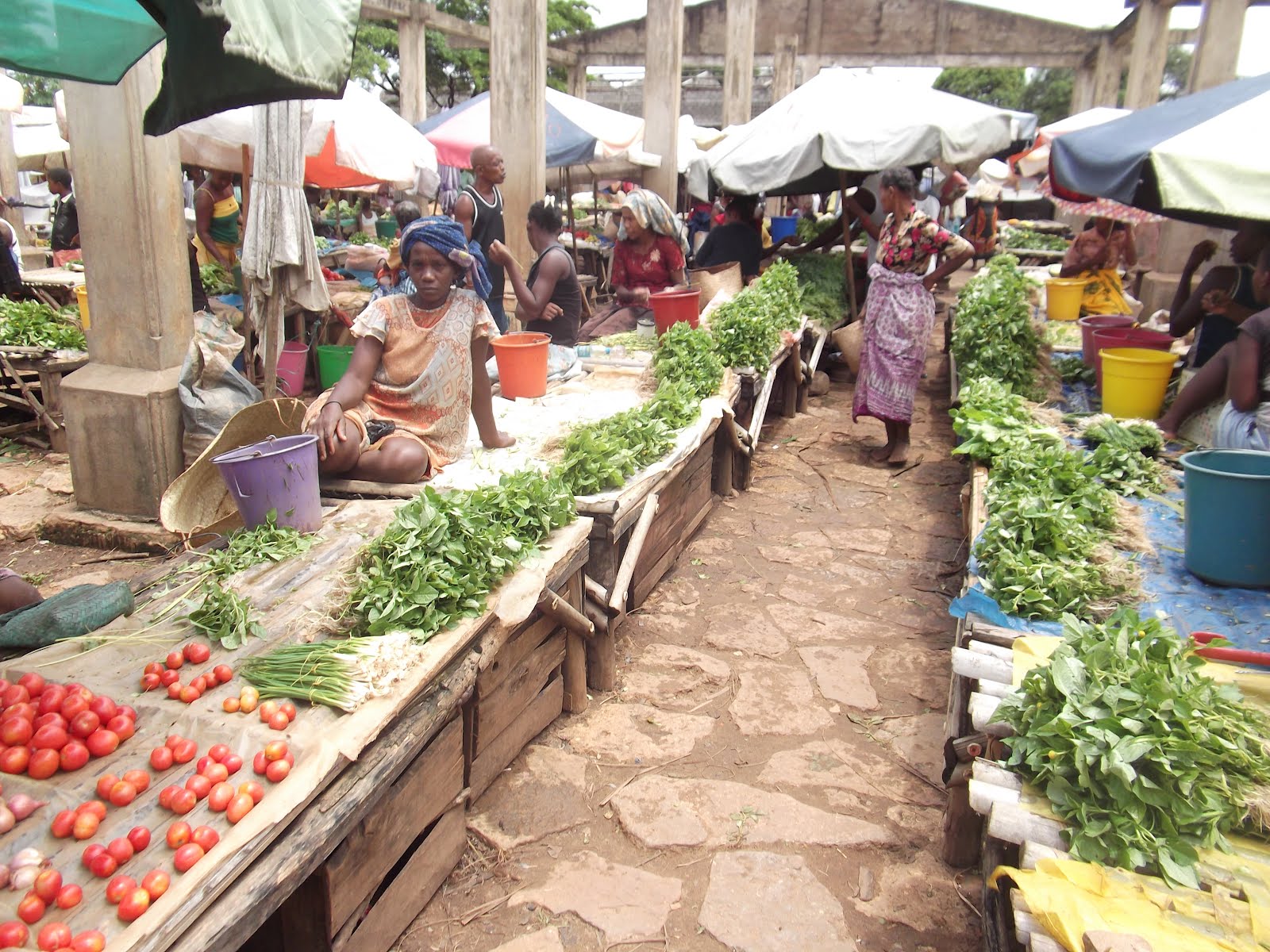
I've joined ranks with Posh Corps. Reintegration into modern society wasn't actually as difficult as I thought it would be. Port Berge still emanates a very Malagasy vibe; however there is a bank, a radio station, and police station here, not to mention a market with meat available everyday of the week. I feel a bit guilty because of all of the conveniences available to me here. In comparison to what my life in the ambanivohitra (countryside) I feel like I've become royalty.
Initially, I had many anxieties about having to reintegrate into a new community after I found out I was moving sites. However, its only been two weeks and already I feel quite tamana (at home), a concept very important to Malagasy people. I remember the difficulties I had to overcome the first time I moved into my last site by myself. but of course circumstances were quite different for me then. My Malagasy was nowhere where it is now, it was a small village where traditional customs and beliefs were meticulously upheld, and overall a very huge culture shock. I am more acclimated to this country now culturally and linguistically. And there isn't the same pressure to integrate into a big city as much as in a small village. Plus, its nice not feeling guilty when I buy toilet paper (a luxury not many people could afford in my last home) and be able to eat meat more than once a week.
I suppose I am lucky that I could experience both urban and rural life during my service. I am still the same volunteer but I have a feeling that my service has taken a huge turn. My service will probably be focused less on cultural integration and the "experience" and more about productivity. Already, the pressures of being in a large town are coming back. I carry my planner everywhere I go now, before it was my switchblade just in case I needed it in the bush.
Transportation

Taxi-brousses are the primary form of transportation in Madagascar as the great majority of folks don’t own a car, bike, or motorcycle. These are dilapidated vehicles sent from abroad. Frequently these vehicles will break down or need an extra push in the back to get moving. This is one of the reasons why the mpaneira (freight collector) sits close to the side door. Here is a recollection of one of my more interesting rides. My vacation started off with me dozing off in the front seat of a taxi-brousse. Before I knew it the dashboard started to emit toxic fumes, then comes the voice of the driver through the smoke screaming at me to get out, and then the push which caused me to jump out of the vehicle and run to safety with the other passengers. “Just another regular taxi-brousse ride,” they said with their eyes as they grabbed mangoes and snacked on them while the mpaneira and the driver took out their tools and went to work. We hopped back in and before I know it a zebu (humped back cow) attempts suicide by running adrift from the rest of the herd across the street right into the hood of the car. It knocked over. No worries, it just brushes itself off and meanders back to the others. Another two hours is spent between the herders and the driver arguing over who deserves compensation. The headlight is smashed to bits and the herder thinks his cow is hurt. We’re on the road again. Oop, passed a fellow volunteer who is carrying water in a bucket on her head near the road. We wave at each other. I’m in a van that is meant for fifteen passengers but is miraculously seating thirty, and I’m logged right smack in the middle. Passengers are passing around quat leaves in order to make the ride more tolerable.
Thursday, February 9, 2012
The Necessity of Taking a Holiday
"You don't decide. Diego decides for you, because Diego's got you by the balls," says a fellow PCV who lives in this spectacular northern Malagasy city of glitz, beach, and debauchery. It's no wonder one of the most popular bars in Diego is named L'Etincelle or Glitter, as it epitomizes what I feel about this city that is part Vegas part Miami.
My program director forced me to take a vacation after the whole fiasco at my previous site, plus no one was going to be in the office during the holidays so moving to my current location needed to wait. I decided that I would lay on the beach where I could let the ocean waves wash away my pent up stress. I couldn't think of a better place than Diego-Suarez to do this.
I especially needed the vacation after the fourteen hour taxi-brousse ride (see next blog). My first meal was at a classy French restaurant and consisted of canard with a thick creamy sauce with sauteed veggies and fresh baguettes. The rest of this vacation was spent consuming ice cream, buttery patisseries, hamburgers, pizzas, French cuisine, paella, and mojitos by the pool at Le Grand Hotel. Encumbered with French influence its no wonder why Diego offers such a tasty palette. I never felt the need to be a hedonist before but Diego had forced it out of me. I came to the realization how much of a vacation I needed from having spent nine months in the desert.
However its important to keep in mind the fact that volunteers also serve in large touristic cities, so it's important to respect them by keeping face and keeping it under control. And vacations during service should be taken to re energize you for site versus as just an escape from life at site.
But with all of that said Diego ranks number one with me as far as favorite cities in Madagascar are concerned. With the crystal clear ocean of Emerald Bay to the upbeat night life, to the air-conditioned chocolate shop you can't go wrong (unless you would like to) in Diego-Suarez.
My program director forced me to take a vacation after the whole fiasco at my previous site, plus no one was going to be in the office during the holidays so moving to my current location needed to wait. I decided that I would lay on the beach where I could let the ocean waves wash away my pent up stress. I couldn't think of a better place than Diego-Suarez to do this.
I especially needed the vacation after the fourteen hour taxi-brousse ride (see next blog). My first meal was at a classy French restaurant and consisted of canard with a thick creamy sauce with sauteed veggies and fresh baguettes. The rest of this vacation was spent consuming ice cream, buttery patisseries, hamburgers, pizzas, French cuisine, paella, and mojitos by the pool at Le Grand Hotel. Encumbered with French influence its no wonder why Diego offers such a tasty palette. I never felt the need to be a hedonist before but Diego had forced it out of me. I came to the realization how much of a vacation I needed from having spent nine months in the desert.
However its important to keep in mind the fact that volunteers also serve in large touristic cities, so it's important to respect them by keeping face and keeping it under control. And vacations during service should be taken to re energize you for site versus as just an escape from life at site.
But with all of that said Diego ranks number one with me as far as favorite cities in Madagascar are concerned. With the crystal clear ocean of Emerald Bay to the upbeat night life, to the air-conditioned chocolate shop you can't go wrong (unless you would like to) in Diego-Suarez.
Tuesday, February 7, 2012
A Tropical Christmas
For the first time in my life I was away from my loved ones for Christmas, without the need of a down jacket and where glistening snow was nowhere in sight. Rather I spent the holiday on a tropical island with a fellow volunteer. Because of the events explained in the previous blog I was forced out of my site around Christmas, which I had expected to spend the holiday with my community. It was still a great Christmas despite the lack of candy cane and wrapping paper. Cecilia’s village is similar to my old one in infrastructure (palm roofs and mud walls) and population (Tsimihety). Therefore I feel overall it emanated a similar Christmasy ambiance that own village would have. We went “grocery” shopping a couple days before in the neighboring district capital to find the perfect holiday bird. We spotted our chicken, which was a bit small for slaughter, which we over paid for (a total of 2.5 dollars!)! We named it Noel for festivities sake. We spent the holidays listening to Hindi music on cassettes that Cecilia bought on discount from a local Karani shop (Indian minority in Madagascar) and drinking precious hot cocoa sent from the states. At night we would be drenched by the tropical storms (rainy season!) from her leaky palm thatched roof while simultaneously being eaten alive by potentially malarial laden mosquitoes since rats chewed through her bed net. In the morning we’d be covered in rat shit with an overzealous roaster crowing outside her mud hut. But this didn’t dampen our holiday mood. Cecilia held the knife by the chicken’s throat and screamed, “No! You have to do this…it’s character building!” I held the butcher knife in my right hand while stepping down on its wing with it’s beady eyes looking up at me. Nope, this wasn’t going to happen either. This is when we grabbed the small children already staring in at us through the window. The nine year old boy takes the knife and nonchalantly slits its jugular. The other children immediately start gutting its innards-how convenient. We spend 3 hours roasting the chicken on Cecilia’s homemade cook stove made out of mud and clay while making paella with the use of dried shrimp reminiscing about our past Christmases. I’m looking forward to my next tropical Christmas!
Subscribe to:
Posts (Atom)